
Diagnosis of Epilepsy
Typically, an individual who has experienced more than one spontaneous epileptic seizure is said to have epilepsy, the term denoting the increased likelyhood of experiencing further seizures. This definition is however, in many instances, inaccurate, failing to account for many factors, such as the specifics of seizure manifestations and their tiggers, remmission and resurgance of the condition, and pathologies or syndromes of which epilepsy may be a symptom. It is also important to note a number of conditions exhibit simillar symptoms to some epilesies whilst pertaining different aetiologies.
Considering the broad nature of the condition and the impact the term has on the everyday life of the effected individual, it is of upmost importance to diagnose the form epilepsy as accurately as possible, in order to assess the likelyhood of reccurrences and the severity of a seizures effects. This involves characterising the locations and patterning of seizure activity.
Methods of diagnosis
The manifestations of most epilepsies already being well characterised, a description of the seizures effects on the individual, as well as the conditions in which it was experience and the timings of any recurrences provide essential information in the diagnosis. However this is rarely enough to ensure a diagnosis, if any can be made at all, thus a number of tests have been developed to ellucidate further information:
EEG (electroencephalogram) tests study the intensity of electrical activity over specific areas of the cerebral cortex via a number of electrodes attached the scalp from which a tace of activity waveforms is derrived. Intracranial electrode may also be used to provide more accurate readings. Different forms of epileptic seizure create characteristic EEG traces, providing perhaps the most clinically significant data for the purposes of diagnosis. Variable conditions, such as varying light intensities and physical strains, can identify possible triggers
 |
|
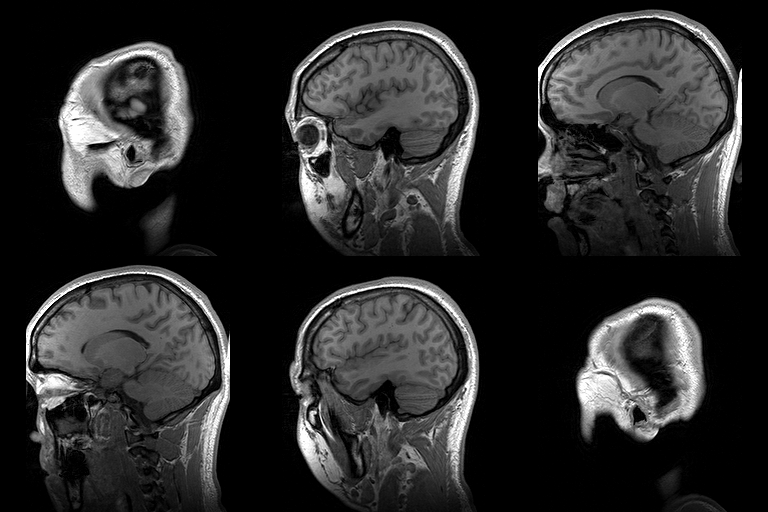
From https://en.wikipedia.org/wiki/File:Structural.gif under the wikimedia commons liscence |
Imaging of the brain may be undertaken to expose structural abnomalities, that may yield atypical neural pathways, as possible causes of seizures. Techniques include CT (computational tomography) MRI (magnetic resonance imaging) PET (positron emmission tomography) and DTI (diffusion tensor imaging). If it deemed necessary, the imaging technique used will be selected based on availability, cost, and the level of detail required.
It is important to analyse any and all factors that may underlie the condition, thus a generalised assesment of the individuals overall health and medical history must be undertaken. Blood samples are commonly taken to identify abnormalities such as viral infection, abnormal ionic concentrations or anaemia.
From these an accurate picture of the form of epilepsy, and perhaps even it's aetiology can be determined, and an approptiate treatment plan formed. A list of different seizure types and characterised epileptic syndromes can be found elsewher in this website.